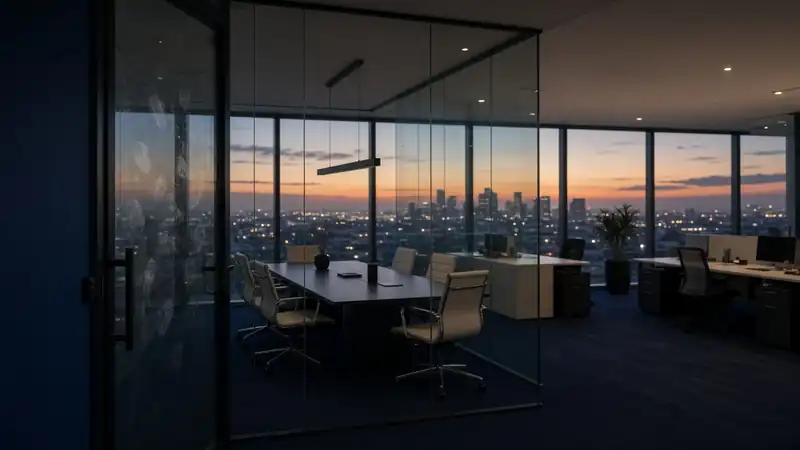
A clean office should be almost invisible.
Employees should walk in and find clear floors, clean restrooms, presentable desks and a kitchen that does not make anyone reconsider lunch.
Customers should not notice fingerprints on doors.
Trash should never become the defining smell of a room.
The challenge is that commercial spaces do not become dirty evenly.
The lobby may receive hundreds of footsteps while a conference room remains unused.
The microwave may need daily attention while an upper shelf needs only periodic dusting.
That is why effective office cleaning should be based on risk, traffic and frequency, not one giant checklist performed identically every time.
Start With High-Touch Areas
The CDC recommends giving particular attention to high-touch surfaces in facilities, including counters, door handles, stair rails, elevator buttons, touchpads, restroom fixtures and desks.
This does not mean every surface must constantly be drenched in disinfectant.
CDC guidance distinguishes cleaning from disinfecting and notes that routine cleaning removes most harmful germs from surfaces. Disinfection can be added when appropriate, especially in higher-risk circumstances.
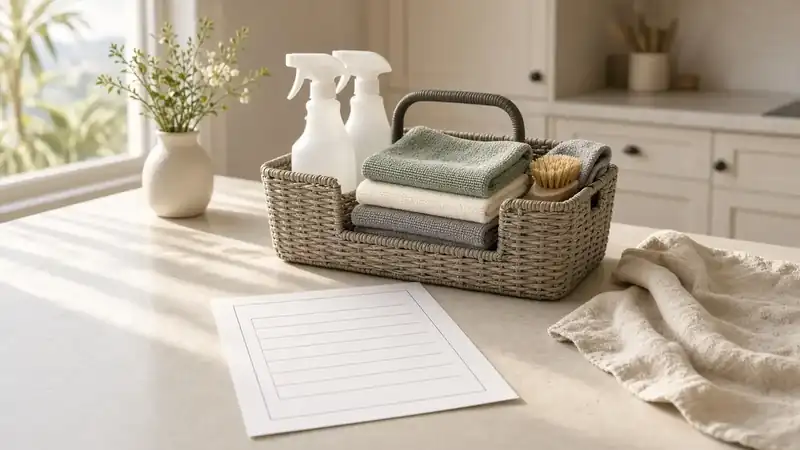
A good commercial cleaning program therefore begins by identifying what people actually touch.
Daily Office Cleaning
Entry and Reception
The entrance creates the first impression.
Clean glass doors.
Remove fingerprints around handles.
Vacuum or mop flooring.
Straighten reception areas.
Empty visible trash.
Clean counters.
Inspect mats.
A client may never see the back office.
They always see the entrance.
Common Work Areas
Focus on shared surfaces.
Remove trash.
Clean shared tables.
Vacuum high-traffic carpet.
Mop hard floors where needed.
Wipe accessible high-touch surfaces according to company policy.
Do not spray electronics directly.
Follow manufacturer instructions for monitors, keyboards and other equipment.
Restrooms
Restrooms generally require some of the most consistent attention.
Clean toilet and urinal surfaces.
Clean sinks.
Wipe fixtures.
Clean mirrors.
Refill consumables when that falls within the service agreement.
Empty trash.
Clean floors.
Inspect high-touch areas.
Odor is often the fastest indication that cleaning frequency is insufficient.
Break Room
The office kitchen creates a unique combination of food, moisture and frequent touching.
Clean counters.
Clean sink.
Wipe appliance exteriors.
Address microwave residue.
Clean table surfaces.
Empty trash.
Sweep or vacuum.
Mop.
Do not let food waste remain in bins longer than necessary.
Floors
Floor frequency should follow traffic.
An entrance may require daily attention.
A private executive office may not.
A single schedule for every room wastes effort where it is not needed and neglects the areas that actually require it.
Weekly Office Cleaning
Weekly tasks can go beyond the visible daily reset.
Detail baseboards in high-traffic areas.
Dust lower vents.
Clean accessible door frames.
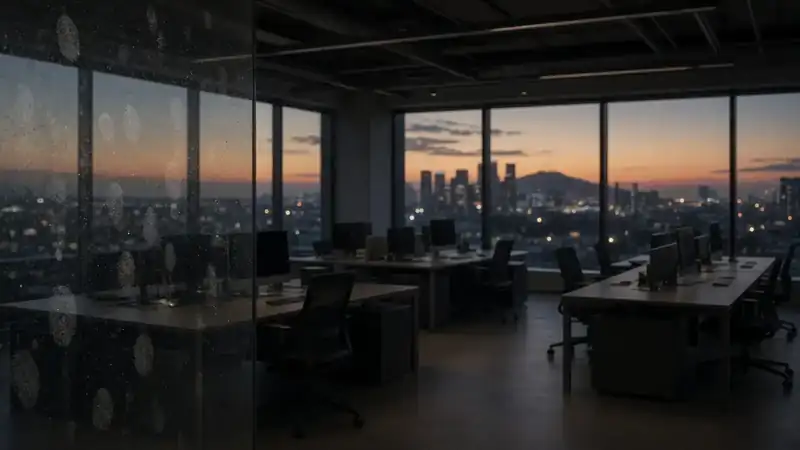
Address glass partitions.
Vacuum furniture.
Clean beneath easily movable items.
Detail conference-room surfaces.
Clean stair railings.
Dust window sills.
Inspect corners and edges.
The exact schedule should reflect the building.
Periodic Deep Cleaning
Some tasks require less frequent but more intensive service.
Carpet extraction.
Upholstery cleaning.
Interior window cleaning.
Exterior window cleaning.
Floor detailing.
High dusting.
Natural-stone care.
Detailed fixture cleaning.
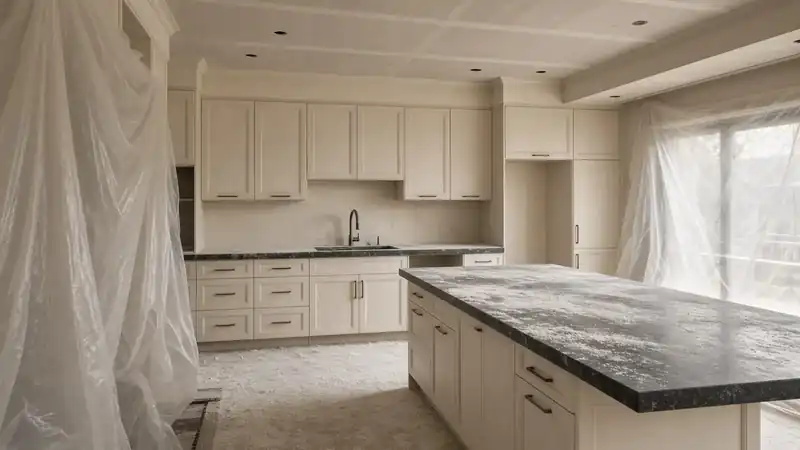
These services should be scheduled based on wear rather than ignored until a complaint arrives. We clean commercial spaces throughout greater Los Angeles, plus carpet, upholstery, floors, and windows — including after a remodel.
Carpet Requires a Separate Plan
Daily vacuuming and deep carpet cleaning are not interchangeable.
Vacuuming removes loose particulate matter.
Periodic extraction addresses different forms of embedded soil.
High-traffic lanes near entrances and hallways may need attention sooner than private offices.
The EPA recommends routine vacuuming of carpets and fabric-covered furniture and suggests considering HEPA-filtered equipment to reduce dust recirculation.
Glass Matters More Than Businesses Think
A dirty window does not usually create a health concern.
It creates an image concern.
Fingerprints on lobby glass, conference-room partitions or storefront windows can make an otherwise clean business look neglected.
For customer-facing businesses, include glass inspection as part of opening or closing procedures.
Build a Cleaning Schedule Around Traffic
Consider a business with 25 employees.
The conference room is used twice a week.
The restroom is used continuously.
The front door is touched hundreds of times.
Why would all three receive identical cleaning frequency?
They should not.
Create zones:
- High traffic
- Moderate traffic
- Low traffic
Then define what each zone requires daily, weekly and periodically.
Different Businesses Need Different Programs
A law office and restaurant should not share the same cleaning plan.
Neither should a retail store and warehouse.
Consider:
- Number of employees
- Customer volume
- Operating hours
- Floor materials
- Food preparation
- Restroom usage
- Children
- Pets
- Industry requirements
- Public versus private areas
The cleaning plan should fit the business.
What About Disinfection?
Use a risk-based approach.
The CDC recommends cleaning surfaces before sanitizing or disinfecting because dirt and impurities can interfere with the process.
When disinfectants are used, follow label instructions including any specified contact time.
Do not assume spraying and immediately wiping produces the intended result.
Never mix cleaning chemicals unless the product label specifically directs you to do so.
Night Cleaning vs. Day Cleaning
Both models can work.
After-hours cleaning minimizes interruption.
Daytime cleaning can address continuously used facilities.
Some businesses benefit from a hybrid:
Major cleaning at night.
Restroom checks and spill response during operating hours.
We operate 24 hours a day, seven days a week, which gives businesses that cannot interrupt customers a night crew, a dawn crew, or a hybrid.
Do Not Forget Safety
Wet floors require appropriate caution signage.
Cleaning equipment should not create unnecessary trip hazards.
Products must be used according to their labels.
Specialty surfaces require appropriate methods.
Commercial cleaning is not simply residential cleaning performed in a larger room.
The operating environment matters.
What Should You Ask a Commercial Cleaning Company?
Ask whether the company is insured.
Define exactly which areas are included.
Specify operating hours.
Clarify who supplies consumables.
Ask how keys or access codes are handled.
Discuss alarm procedures.
Clarify specialty flooring.
Identify sensitive areas.
Set a communication process for problems.
Determine who performs quality checks.
We're licensed, insured, and bonded. Vehicles carry commercial equipment for a range of job sizes.
Create a Written Scope
Commercial cleaning relationships fail when expectations remain verbal.
A written scope should identify:
- Rooms
- Frequency
- Tasks
- Specialty services
- Exclusions
- Access procedures
- Scheduling
- Point of contact
That turns “clean the office” into an accountable service plan.
The Bottom Line
The best office cleaning schedule is not the longest checklist.
It is the one that puts the most attention where the business receives the most use.
Clean high-touch and high-traffic areas frequently.
Maintain restrooms consistently.
Keep food areas under control.
Schedule floors, carpet, windows and detail work before they visibly deteriorate.
Use an appropriate cleaning-versus-disinfection strategy.
And adjust frequency when traffic changes.
For Los Angeles businesses that need recurring or one-time commercial cleaning, Extreme Quality Clean handles offices, carpet, windows, upholstery and floors. Request a quote or call (818) 294-3141. We work 24/7. You get the number before we start.
A clean workplace should not demand attention.
It should quietly support everything else happening inside it.