You cleaned the spot.
The smell disappeared.
Then three days later—or after a warm afternoon—it came back.
This is one of the most frustrating carpet problems for pet owners because it feels as though the cleaning “did not work.”
Often, the real issue is depth.
What you see on the surface of a carpet is only the first layer of a flooring system.
Below the visible fibers are carpet backing, padding and the subfloor.
Liquid does not necessarily stop at the top.
That is why a pet accident can become a much larger cleaning problem than its visible stain suggests.
Why Pet Urine Can Be Difficult to Remove
When a pet urinates on carpet, the liquid can spread outward and downward.
The visible spot may be smaller than the contaminated area beneath it.
A spray applied only to the surface may therefore treat the appearance without reaching the complete source.
In practice, contamination often reaches the carpet backing, the pad, and sometimes the subfloor — which is why a surface spray can make the stain look gone while the odor source stays underneath.
The important lesson is not that every pet accident requires major restoration.
Most do not.
It is that persistent odor should be approached as a source-location problem, not simply a fragrance problem.
Why Does the Smell Seem Stronger on Some Days?
Pet odors can appear more noticeable when indoor conditions change.
Humidity and temperature can influence how odors are perceived and may make residual contamination more apparent.
This explains the classic homeowner experience:
“The carpet smelled fine yesterday. Why can I smell it again today?”
The contamination may never have been fully removed.
It was simply less noticeable.
Why Air Freshener Does Not Solve It
Air freshener changes what the room smells like.
It does not remove contamination.
If the odor source remains inside carpet or padding, fragrance creates a temporary overlay.
Once the fragrance dissipates, the original odor becomes obvious again.
True odor control requires identifying and treating the source.
Why Scrubbing Can Make a Stain Larger
Aggressive scrubbing is another common mistake.
Rubbing can spread liquid through surrounding fibers.
It may also damage the carpet pile depending on the material.
For a fresh spill, blotting is generally preferable to rubbing.
Absorb as much liquid as possible using clean material, working carefully rather than grinding the contamination deeper into the carpet.
What About Baking Soda?
Baking soda can absorb some odors near a surface.
That does not mean it can remove deep contamination.
Similarly, vinegar recipes are popular online, but carpet fibers and backing materials vary widely.
Using an inappropriate chemical may discolor fibers, leave residue or interfere with subsequent professional treatment.
Before applying any cleaning product, check the carpet manufacturer's care guidance and test according to directions.
Why More Soap Can Make Things Worse
People naturally assume that a stronger mess needs more cleaner.
Carpet does not work that way.
Excess detergent that is not adequately rinsed can remain in fibers.
Residue can then attract additional soil.
This is why proper carpet cleaning involves not only applying a cleaning agent but also removing contamination and cleaning residue effectively.
What Professional Carpet Cleaning Changes
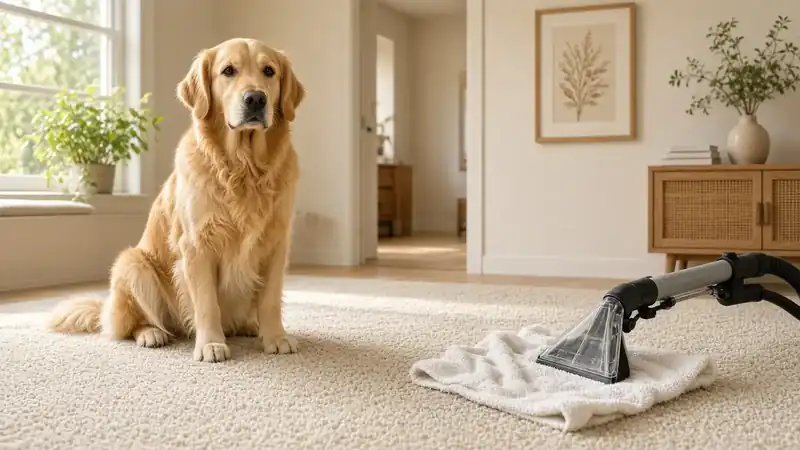
Professional carpet cleaning may use equipment capable of deeper extraction than ordinary household tools.
Our carpet work uses truck-mounted equipment for shampoo and deep-steam cleaning, and we treat carpet, upholstery, mattresses, and pet stains as specialty work — not a side task on a house-cleaning visit.
The right process depends on:
- Carpet material
- Backing
- Severity
- Age of stain
Whether padding is affected.
Whether odor exists without visible staining.
Previous products applied.
Pet type.
Number of contaminated areas.
A professional should inspect rather than promise that every stain can be removed identically.
When the Padding Is the Real Problem
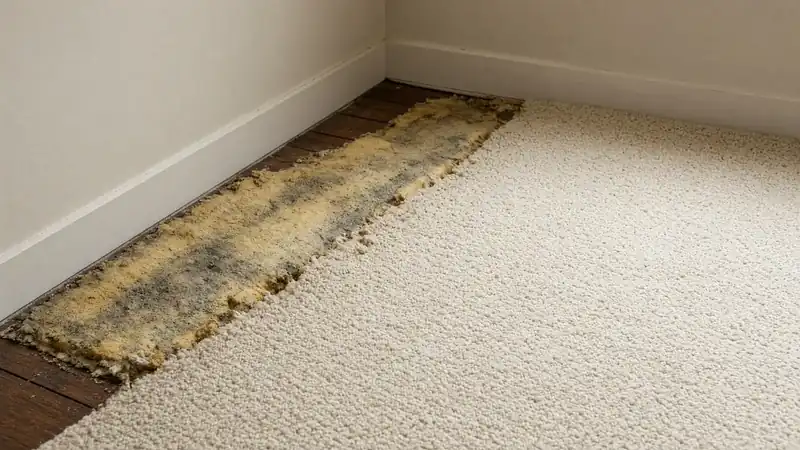
Imagine pouring a cup of liquid onto a sponge covered with fabric.
Cleaning the fabric may make the top look better.
The sponge still holds liquid.
Carpet padding can create a similar problem.
In severe cases, treatment may have to reach below the carpet face.
If contamination has reached structural materials, cleaning alone may not always be sufficient.
An honest professional should explain when replacement or more extensive remediation is more appropriate.
How to Handle a Fresh Pet Accident
Speed helps.
First, remove solid material if present.
Next, blot liquid using clean absorbent towels.
Apply pressure rather than aggressive rubbing.
Follow carpet-manufacturer guidance for approved spot-treatment products.
Keep pets and children away from wet treatment areas.
Avoid mixing cleaning chemicals.
The EPA warns consumers never to mix cleaning products casually, and CDC guidance specifically warns against combining bleach with other cleaners because hazardous vapors can be created.
If the accident is large, repeated or already producing persistent odor, professional assessment may save time and prevent unnecessary experimentation.
What About Stains That Are Already Dry?
Old stains are more complicated because you may no longer know their original boundaries.
A visible mark may represent only part of the affected area.
Professional cleaners may use inspection techniques designed to locate contamination beyond what is obvious under ordinary lighting.
Treatment then depends on severity.
Pet Hair and Dander Matter Too
Pet carpet care is not only about accidents.
Hair, dander and tracked soil accumulate through normal living.
Regular vacuuming is one of the most important maintenance steps.
The EPA recommends routine vacuuming of carpets and fabric-covered furniture and notes that people with allergies or asthma may require more frequent cleaning. A vacuum equipped with appropriate filtration may also reduce the amount of collected dust escaping back into the room — the same reason dusty Los Angeles homes need a HEPA machine more than a faster pass.
How Often Should Pet Owners Clean Carpet?
There is no universal interval.
A low-traffic apartment with one short-haired cat is different from a large home with three dogs using a backyard several times per day.
Factors include:
- Number of pets
- Shedding
- Indoor/outdoor activity
- Children
- Carpet color
- Carpet manufacturer guidance
- Allergies
- Accident history
- Vacuuming frequency
- Visible traffic lanes
- Odor
Professional cleaning should complement routine vacuuming, not replace it.
How to Reduce Future Problems
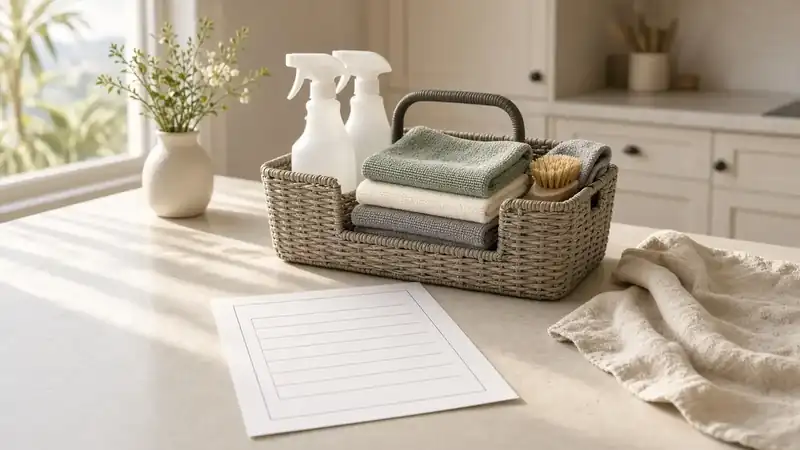
Create a pet-cleaning station near the primary entrance.
Keep absorbent towels available.
Clean paws after muddy outdoor activity.
Vacuum high-traffic pet areas more often.
Wash pet bedding routinely according to care instructions.
Address accidents quickly.
Do not repeatedly apply random chemicals to the same spot.
Schedule deeper treatment before odor spreads throughout a room.
When Should Carpet Be Replaced Instead?
Cleaning has limits.
Replacement may be more appropriate when:
Padding is extensively contaminated.
The carpet is physically damaged.
Odor originates from the subfloor.
Fibers are permanently discolored.
Repeated accidents have affected a broad area.
The carpet is already at the end of its useful life.
Professional cleaning is valuable partly because a reputable technician should be able to tell you when additional cleaning is unlikely to produce a good return.
What to Tell a Carpet Cleaner Before the Appointment
Do not simply say, “I need the carpets cleaned.”
Mention the pet problem.
Tell them:
Dog or cat.
Approximate accident locations.
Whether stains are fresh or old.
Whether odor is constant or intermittent.
Previous products used.
Rooms affected.
Any furniture that must be moved.
The more information the technician receives, the better prepared the service can be.
A Clean Carpet Should Not Merely Smell Perfumed
The goal is not fragrance.
The goal is removal.
That means removing loose soil, treating applicable contamination and extracting residues using a process appropriate for the material.
Extreme Quality Clean has served Los Angeles for more than 25 years and treats carpet, upholstery, and pet stain and odor work as a specialty. Request a quote or call (818) 294-3141. You get the number before we start.
If pet odor keeps returning despite repeated surface treatment, stop covering it up.
Find the source.
That is where lasting improvement begins.