A home can look clean and still contain surprising amounts of dust, grease, residue and buildup.
The obvious areas usually get attention: countertops, toilets, visible floors, sinks and furniture. The places that make the biggest difference, however, are often just outside the normal cleaning routine.
Think about the top edge of a door frame. The narrow track beneath a sliding glass door. The underside of a faucet. The baseboard behind a nightstand. The vent above the hallway. The strip of floor beneath a refrigerator.
Those are the areas where a quick cleaning and a genuinely detailed cleaning begin to look very different.
For homeowners searching for house cleaning in Los Angeles, understanding that difference can help you decide whether your home needs routine maintenance, a deep clean or professional attention.
Why Los Angeles Homes Can Become Dusty So Quickly
Los Angeles homes face an unusual combination of environmental conditions.
Doors and windows may remain open for much of the year. Dry outdoor conditions contribute to airborne dust. Traffic introduces additional particulate matter into urban areas. Pets bring debris indoors. HVAC systems run frequently during warm months. Remodeling and construction are common throughout the region.
The U.S. Environmental Protection Agency recommends frequent cleaning and ventilation to reduce indoor dust and particulate matter, including vacuuming carpets and furniture, damp-dusting hard surfaces and maintaining HVAC filtration. The EPA also notes that a HEPA-filtered vacuum can help prevent some collected dust from being released back into indoor air.
That means a good cleaning strategy is not simply about making a home photograph well. It is about systematically removing material from places where it continually accumulates. If dust seems to return two days later, read why Los Angeles homes get so dusty.
Start With the Rule Professionals Use: High to Low
One of the biggest mistakes during house cleaning is beginning with the floor.
If you dust a ceiling fan after vacuuming, the dust lands on the clean floor. If you wipe cabinets after cleaning the counter, debris ends up on the counter again.
A more efficient sequence is:
- Ceilings and ceiling fixtures
- Upper shelves
- Furniture
- Counters
- Baseboards
- Floors
This prevents you from repeatedly cleaning the same surface.
The 35 places most people forget
1. Ceiling Fan Blades
Fan blades are easy to overlook because you rarely see their upper surfaces.
Dust can build into a surprisingly thick layer. When the fan runs, some of that material can become airborne again.
Clean both sides of each blade and the housing around the motor.
2. HVAC Supply and Return Vents
A dusty vent can make an otherwise pristine room look unfinished.
The vent cover itself can collect lint and particulate matter. Clean accessible exterior surfaces carefully without pushing dirt deeper into the system.
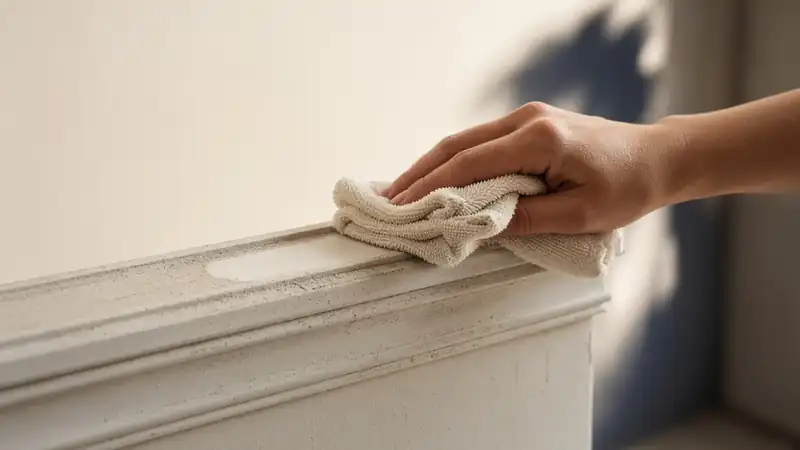
3. Tops of Door Frames
Run a white cloth across the top of a door casing that has not been cleaned recently. The result may be surprising.
Because these surfaces are above eye level, they often go untouched for months.
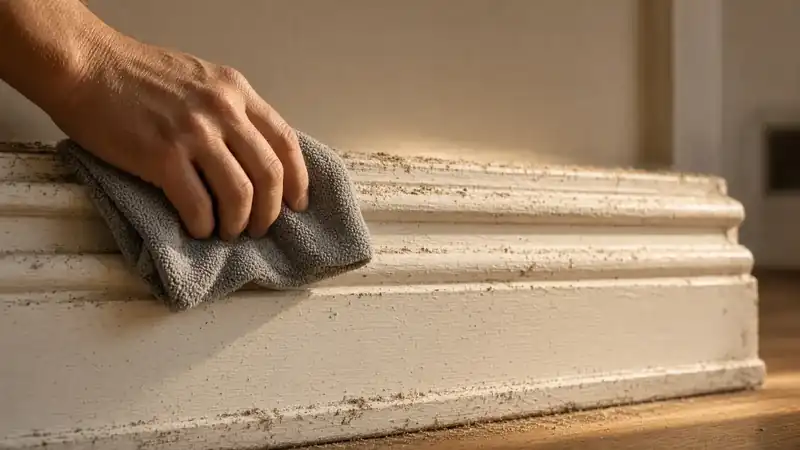
4. Baseboards
Vacuuming near a wall is not the same as cleaning the baseboard.
Dust adheres to horizontal edges, corners and decorative profiles. Kitchens may also develop greasy residue that traps additional dirt.
5. Light Switches
Switch plates are among the most frequently touched surfaces in a home.
The CDC recommends cleaning high-touch household surfaces regularly. In most everyday situations, ordinary cleaning with soap or detergent is sufficient; routine disinfection is generally more important when someone is sick or particularly vulnerable.
6. Door Handles and Cabinet Pulls
Handles collect oils from hands that eventually create visible grime.
Pay particular attention to kitchen cabinet handles near cooking surfaces.
7. The Top of the Refrigerator
It may be one of the dirtiest horizontal surfaces in the kitchen simply because nobody sees it.
Dust can combine with airborne cooking grease and form a sticky layer that is considerably harder to remove later.
8. Refrigerator Door Seals
Food residue and crumbs can become trapped inside gasket folds.
Cleaning these carefully helps maintain a clean food-storage environment and improves the overall appearance of the appliance.
9. Under Small Kitchen Appliances
Coffee makers, mixers, air fryers and toasters create hidden zones where crumbs and grease accumulate.
Move appliances when it is safe to do so rather than wiping only around them.
10. Cabinet Tops
Cabinets that do not extend to the ceiling can accumulate years of dust and cooking residue.
This is a classic deep-cleaning task because it usually requires more time than ordinary weekly maintenance.
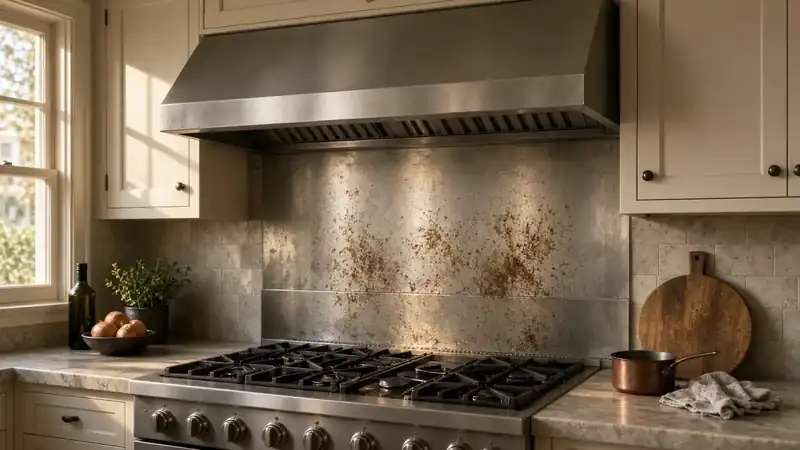
11. Range-Hood Exterior
Grease does not stay on the stove.
It travels with cooking vapor and settles on nearby surfaces. The hood, surrounding cabinetry and backsplash deserve particular attention.
12. Microwave Interior
Food splatter becomes dramatically more difficult to remove once it repeatedly heats and dries.
Cleaning spills early saves considerable effort.
13. Dishwasher Edges
Open the dishwasher and look around the perimeter of the door.
The areas outside the primary wash zone can accumulate residue even though the interior looks clean.
14. Faucet Bases
Water, soap and minerals collect where a faucet meets the counter.
These rings can become increasingly stubborn when they remain untouched.
15. Under the Sink
Many people clean the sink but ignore the cabinet below it.
Remove unnecessary items, inspect for leaks and clean the cabinet floor.
Moisture problems should be corrected rather than simply cleaned over. The EPA recommends fixing leaks and moisture issues promptly and drying affected areas completely.
16. Bathroom Exhaust-Fan Covers
Humidity and airborne lint create visible buildup on fan grilles.
Keeping the accessible cover clean also makes the bathroom appear significantly better maintained.
17. Behind the Toilet
The floor and wall immediately behind a toilet are awkward to reach and therefore frequently missed.
Detailed bathroom cleaning should include the base of the toilet, surrounding floor and accessible wall surfaces.
18. Shower Tracks
Sliding shower doors contain narrow channels where water, soap residue and debris collect.
A clean pane of glass paired with a dirty track still makes the shower look unfinished.
19. Shower Fixtures
Mineral deposits around fixtures are particularly relevant in Los Angeles because LADWP reports hard water in much of the city. The San Fernando Valley and western Los Angeles have historically averaged about 8.6 grains per gallon, which LADWP classifies as hard. Cloudy glass after a wipe is often minerals, not leftover soap — see the hard-water stain guide.
20. Vanity Drawers
Hair, cosmetic residue and dust accumulate quickly inside bathroom drawers.
Periodic emptying and wiping creates a much more complete reset.
21. Mirror Edges
Cleaning the middle of a mirror is easy.
The corners and lower edge often contain dried droplets or product residue.
22. Window Tracks
A sparkling window surrounded by a dirty track rarely looks truly clean.
Tracks collect dust, insects and outdoor debris and usually require vacuuming followed by detail wiping.
23. Window Sills
These areas constantly interact with outdoor air and accumulate dust faster than many interior surfaces.
24. Blinds
Blinds contain dozens of horizontal dust-catching surfaces.
When they are ignored long enough, simply opening or closing them can disturb accumulated dust.
25. Curtain Rods
Like door frames, rods remain above eye level and can go untouched for long periods.
26. Under Beds
Do not assume the vacuum automatically reaches everything.
Storage boxes, bed frames and limited clearance create hidden dust reservoirs.
27. Mattress Edges and Bed Frames
Bedrooms deserve more than floor cleaning.
Vacuum accessible upholstery and mattress surfaces as appropriate for the material, and wipe hard bed-frame surfaces.
28. Lampshades
Fabric and textured shades can collect significant dust without appearing obviously dirty.
Always use a cleaning method appropriate for the material.
29. Upholstered Furniture
Sofas and chairs collect lint, crumbs, hair and debris between cushions. Vacuum first. If the fabric still holds soil or odor, upholstery extraction is the next step — we do that work alongside carpet.
30. Beneath Sofa Cushions
This may be the most revealing cleaning test in the average living room.
Remove cushions when possible and vacuum seams, edges and the platform beneath them.
31. Remote Controls
Another high-touch item that is commonly forgotten.
Follow manufacturer guidance so liquid does not enter electronics.
32. Stair Railings
Hands repeatedly touch the same sections, leaving skin oils and grime.
33. Closet Shelves
Closets are frequently organized without ever being cleaned.
Remove items periodically, dust shelves and vacuum corners.
34. Trash Cans
Changing the bag is not the same as cleaning the container.
Residue can collect around lids, handles and the bottom.
35. Floor Edges and Corners
Even excellent vacuums can miss the narrow perimeter where flooring meets the wall.
Professional detailing often includes an edge pass specifically for these areas.
How Often Should These Areas Be Cleaned?
There is no universal schedule that works for every home.
A household with three children, two dogs and open windows will accumulate dirt faster than a single-person apartment with filtered air and no pets.
Instead of following an arbitrary calendar, watch for the conditions in your home.
High-touch surfaces deserve frequent attention. Kitchens and bathrooms generally require more frequent cleaning than guest rooms. Dust-prone areas may need additional work during dry or windy periods. Homes with pets may require more frequent floor and upholstery care.
For a full calendar — daily through seasonal — use the home cleaning schedule.
When Routine Cleaning Is No Longer Enough
Consider a deep clean when:
Your normal cleaning routine no longer seems to produce a truly clean result; grease is visible on kitchen surfaces; baseboards and vents have substantial buildup; bathrooms have mineral or soap deposits; windows and tracks have been neglected; furniture or carpet requires extraction; or you are preparing for guests, a move, a listing or a major event.
A professional cleaner can also be useful when the problem is not lack of willingness but lack of time.
A detailed clean may involve dozens of small tasks. Individually they seem simple. Collectively they can occupy an entire day or weekend.
The Bottom Line
A genuinely clean home is defined by details.
Floors and countertops matter, but the difference becomes most visible when the forgotten areas are handled too: tracks, trim, fixtures, vents, edges, upholstery and the spaces beneath and behind everyday objects.
Extreme Quality Clean has served greater Los Angeles for more than 25 years and provides residential cleaning alongside carpet, upholstery, floor and window services.
If your home needs more than a quick surface clean, call (818) 294-3141 or request a quote. You get the number before we start.