How often should you clean your house?
Search online and you will find dozens of rigid calendars telling you that one surface must be cleaned every three days and another every two weeks.
Real homes are not that predictable.
A family with children, pets and constant cooking does not create dirt at the same rate as a lightly used apartment.
A house beside a busy road may collect more dust than one on a quiet residential street.
A bathroom used by four people is different from a guest bathroom opened twice a month.
So the most useful cleaning schedule combines frequency with condition.
Use a calendar as a reminder.
Use your eyes, nose and actual household activity to decide when the work is necessary.
Daily: Control the Mess Before It Becomes Buildup
Daily cleaning should be quick.
The goal is not to deep-clean the property every evening.
The goal is to prevent ordinary mess from becoming tomorrow's larger problem.
Kitchen Counters
Wipe after food preparation.
Food-contact areas deserve particular care after raw ingredients.
CDC guidance recommends cleaning counters with hot soapy water and appropriately sanitizing food-preparation surfaces when contamination from raw meat or poultry has occurred.
Dishes and Sink Area
Do not allow food residue to remain indefinitely.
Rinse and load dishes or wash them.
Wipe obvious sink residue.
Dining Surface
Clean after meals as needed.
Spills
Handle spills when they happen.
Fresh soil is almost always easier to remove than dried soil.
Entry Areas
If outdoor dirt is being tracked inside, a quick sweep or vacuum prevents it from spreading throughout the home.
Several Times Per Week: High-Use Areas
The exact frequency depends on the household.
Kitchen Floors
Food crumbs and cooking activity can make kitchens require more frequent floor attention than bedrooms.
High-Traffic Floors
Entry hallways and family rooms may need additional vacuuming.
Pet households often require more.
Bathroom Touch Points
Sink areas and toilets may require light maintenance between complete bathroom cleanings.
Pet Areas
Vacuum hair and clean around feeding areas as required.
Weekly: The Core Household Reset
For many homes, weekly cleaning is the backbone of the system.
Bathrooms
Clean toilets.
Sinks.
Counters.
Mirrors.
Tubs and showers as needed.
Fixtures.
Floors.
The CDC recommends regular cleaning of high-touch household surfaces and cleaning other surfaces when visibly dirty.
Floors
Vacuum carpet and rugs.
Vacuum or sweep hard floors.
Mop surfaces according to flooring guidance.
The EPA recommends routine vacuuming of carpet and fabric-covered furniture and damp-mopping hard floors to help control indoor contaminants.
Dust Accessible Surfaces
Use a damp cloth where appropriate rather than redistributing dust with aggressive dry dusting.
Bedding
Launder based on household needs and fabric-care instructions.
Kitchen Appliances
Wipe exterior surfaces.
Clean obvious microwave spills.
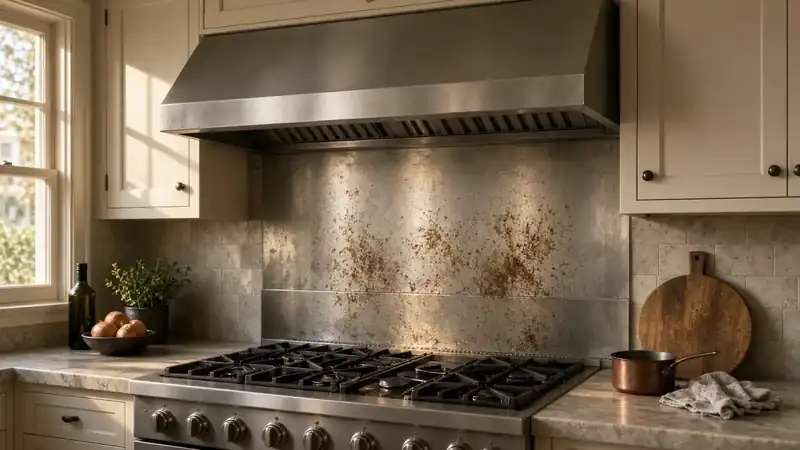
Inspect the stovetop and backsplash.
Trash Containers
Do not only change bags.
Clean the container when residue develops.
Every Two to Four Weeks: Detail What Weekly Cleaning Misses
This is where a home can begin to separate from “looks clean” to “feels genuinely maintained.”
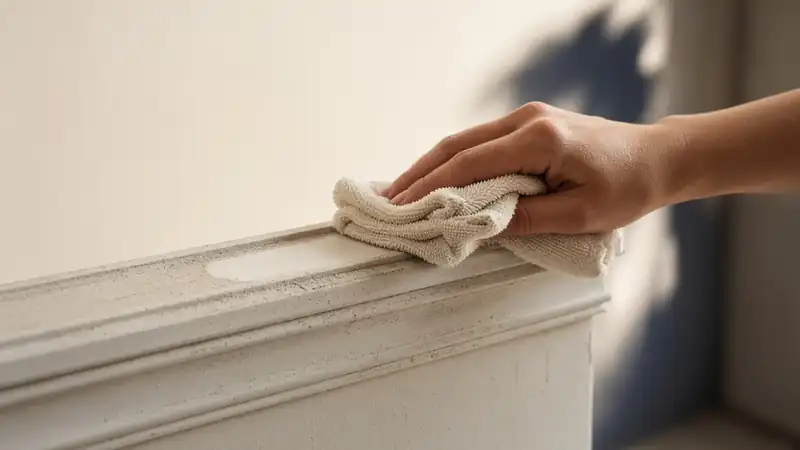
Clean baseboards in high-traffic rooms.
Dust blinds.
Vacuum upholstered furniture.
Clean beneath sofa cushions.
Wipe door frames.
Detail switch plates.
Clean window sills.
Vacuum floor edges carefully.
Clean cabinet fronts where fingerprints and grease accumulate.
Inspect bathroom exhaust-fan covers.
Wipe reachable vents.
Clean interior doors around handles.
Vacuum beneath easily movable furniture.
These tasks do not necessarily require attention every week, but ignoring them for six months can create exactly the buildup that makes a home feel perpetually dusty.
Monthly: Reset the Hidden Zones
Once a month, choose a few areas that are easy to forget.
You do not have to deep-clean the entire home in one day.
Rotate through them.
Refrigerator
Discard expired food.
Wipe shelves when needed.
Inspect door seals.
Clean the top and exterior.
Pantry
Remove crumbs.
Check for expired products.
Wipe shelves.
Under Beds
Move storage containers if practical.
Vacuum the full area.
Closet Floors and Shelves
Dust and vacuum areas that are usually blocked by belongings.
Light Fixtures
Dust accessible shades, pendants and fixtures using appropriate methods.
Range Hood Exterior
Degrease surfaces before residue becomes thick and sticky.
Window Tracks
Vacuum loose dirt and wipe remaining residue.
In Los Angeles, open-window weather and dry conditions can make window tracks accumulate debris quickly.
Every Three to Six Months: Schedule a More Thorough Deep Clean
A seasonal deep clean is less about a specific month and more about catching areas that routine cleaning does not fully address.
Potential tasks include:
- Detailed baseboard cleaning
- Cabinet fronts
- High dusting
- Interior doors
- Blinds
- Detailed shower tracks
- Hard-water spotting around fixtures
- Behind or beneath large furniture where safely accessible
- Interior window cleaning
- Upholstery vacuuming and spot inspection
- Closet resets
- Detailed floor-edge cleaning
If your home is professionally cleaned on a recurring basis, some of these tasks may already be rotated into the service. Ask rather than assume. The house cleaning checklist is a useful audit of what weekly cleaning still misses, and deep vs. regular explains when the baseline itself needs a reset.
Carpet: Vacuum Often, Deep Clean Based on Use
There is no single perfect carpet-cleaning schedule.
Carpet care depends on:
- Foot traffic
- Pets
- Children
- Shoes indoors
- Color
- Carpet type
- Manufacturer guidance
- Allergies
- Spills
- Visible traffic lanes
Regular vacuuming is essential because it removes loose soil before it becomes more deeply embedded.
The EPA recommends routine vacuuming of carpet and fabric-covered furniture and notes that HEPA-filtered equipment can help reduce dust recirculation.
Professional extraction may be useful periodically, especially when carpet develops visible soiling, odor or staining. We offer carpet deep-steam and pet-stain and upholstery work in the Los Angeles area.
Upholstery: Do Not Wait Until the Sofa Looks Dirty
Furniture can hold dust, crumbs, hair and skin oils for a long time before obvious staining appears.
Vacuum seams and beneath removable cushions regularly.
Treat spills quickly according to manufacturer instructions.
Periodic professional upholstery cleaning may be appropriate for heavily used furniture, pet households or light-colored fabrics.
Always confirm fabric-care codes before applying products.
Windows: Clean Based on Exposure, Not a Random Calendar
Windows facing sprinklers, busy streets or construction activity may need service much sooner than protected windows.
Los Angeles water hardness can also contribute to spotting when irrigation water repeatedly reaches exterior glass. LADWP classifies much of the city's water as hard, which helps explain why mineral deposits can remain after droplets evaporate. The hard-water window guide covers what ordinary glass cleaner cannot.
Watch for:
- Cloudiness
- Mineral spots
- Fingerprints
- Track debris
- Dust on frames
The cleaner the glass, the more daylight enters without highlighting grime.
Kitchens Need Extra Attention Because Grease Changes Everything
Kitchen soil is not just dust.
Cooking releases oils and food residue that can combine with airborne dust to create a sticky film.
That film is more difficult to remove than ordinary dry dust.
For homes that cook frequently, inspect:
- Range hood
- Upper cabinets
- Cabinet pulls
- Backsplash
- Stovetop edges
- Microwave
- Refrigerator handles
- Counter corners
Cleaning grease while it is light is far easier than waiting for a heavy layer to develop.
Bathrooms Need Extra Attention Because Water Leaves Something Behind
Water evaporates.
Soap and minerals often do not.
That means showers, faucet bases, glass and tile can gradually develop visible deposits even when the room is cleaned regularly.
In Los Angeles, hard water can accelerate this appearance.
A practical routine is to remove excess water from shower glass when possible, keep the room ventilated, wipe fixtures before deposits become heavy and address caulk or moisture issues promptly rather than cleaning over them.
The EPA emphasizes moisture control as an important part of managing biological contaminants inside homes.
When Someone Is Sick: Change the Routine
Routine cleaning and illness-response cleaning are not identical.
CDC guidance notes that ordinary cleaning removes many germs from household surfaces and that disinfection may be appropriate when someone is sick or at higher risk.
Focus on frequently touched surfaces.
Follow disinfectant labels carefully.
Observe required contact time.
Ventilate as directed.
Never mix bleach with ammonia, vinegar or other cleaners.
More chemicals do not automatically equal better cleaning.
Correct product use matters.
Pet Households Usually Need a Faster Schedule
Pets change the cleaning rhythm.
Hair collects on furniture and floor edges.
Paws carry outdoor soil.
Food areas collect crumbs.
Accidents may require immediate attention.
A useful pet-household routine often includes:
- More frequent vacuuming
- Washable entry mats
- Regular pet-bedding laundry
- Furniture vacuuming
- Immediate accident cleanup
- Periodic carpet and upholstery assessment
Do not wait for odor to become the signal that attention is needed.
Los Angeles Homes May Need More Dust Management Than You Expect
Southern California's climate makes it easy to leave doors and windows open for long periods.
That can be pleasant, but it also increases outdoor particle entry.
Traffic, nearby construction, dry soil and wildfire smoke can all affect indoor cleanliness.
During poor outdoor air-quality events, follow current public-health and EPA recommendations rather than leaving windows open simply because the temperature feels comfortable.
If dust seems to return immediately after cleaning, inspect window tracks, HVAC filters, ceiling fans, upholstery, carpet, entry mats and upper shelves. The problem may be ongoing particle movement rather than insufficient effort — twelve of the usual causes are in why Los Angeles homes get so dusty.
A Simple Weekly Cleaning Order That Saves Time
The order of operations can make cleaning substantially faster.
Start by decluttering enough to access surfaces.
Then:
- Remove trash.
- Start laundry or dishwasher loads.
- Dust high surfaces.
- Clean bedrooms and living areas.
- Clean bathrooms.
- Clean kitchen counters and appliances.
- Vacuum upholstery if needed.
- Vacuum floors.
- Mop hard floors.
- Perform a final inspection.
The logic is simple:
Work high to low and dry to wet whenever practical.
Do not mop first and then knock dust onto the floor.
Do not clean a sink and then rinse dirty cleaning tools into it afterward.
When Should You Hire a Professional Cleaner?
Professional cleaning becomes especially useful when:
Your schedule prevents consistent maintenance.
You want recurring weekly or biweekly service.
You need a deep reset.
You are moving in or out.
You are hosting an event.
A property has accumulated dust or kitchen buildup.
Carpet, windows or upholstery require specialty equipment.
You want to maintain a larger home without sacrificing an entire day every week.
There is no rule that says every household needs professional service.
The value comes from matching the service to your time, home condition and priorities.
How to Choose a Cleaning Frequency
Instead of asking, “How often does everyone clean?” ask four better questions.
1. How quickly does my home become visibly dirty?
High-use households need faster maintenance.
2. Which areas bother me first?
For some people it is pet hair.
For others it is bathrooms, kitchen grease or dust.
3. Which tasks do I consistently avoid?
Those are the tasks most likely to become deep-cleaning problems later.
4. How much time do I want to spend maintaining the house?
Cleaning frequency should fit your lifestyle rather than become another impossible obligation.
The Best Cleaning Schedule Is the One You Can Maintain
A perfect schedule that nobody follows is useless.
A realistic schedule that keeps the property under control is far more valuable.
Handle fresh spills quickly.
Maintain kitchens and bathrooms consistently.
Vacuum according to traffic.
Dust high surfaces before they become reservoirs.
Rotate secondary tasks.
Schedule deeper cleaning before buildup becomes difficult.
If your household needs professional help, Extreme Quality Clean can take the weekly, monthly, or seasonal work — plus carpet, upholstery, windows and floors. Request a quote or call (818) 294-3141. You get the number before we start.
The goal is not to spend your entire life cleaning.
The goal is to keep small problems from becoming big ones.