You dust the furniture.
You vacuum.
Two days later, the sunlight hits the room and somehow the dust is back.
If that sounds familiar, you may not have a cleaning problem.
You may have a dust-management problem.
Dust is constantly entering, forming and moving through a home. The goal is not to create a permanently dust-free environment—that is unrealistic.
The goal is to control the sources and remove settled material without continually throwing it back into the air.
Los Angeles homes have several conditions that can make the problem especially noticeable: long dry periods, traffic, frequent open-window weather, pets, remodeling and regular HVAC use.
Here are twelve places to look.
Twelve hidden causes
1. Your Windows and Doors Bring the Outdoors Inside
Los Angeles weather encourages people to open windows.
That is great for fresh air when outdoor conditions are good.
It also creates an entry point for outdoor particulate matter.
Dust settles first on window sills, tracks and surfaces near openings before spreading farther through a room.
Look at the track beneath an open window.
If it is coated in fine gray material, you have found one of the routes.
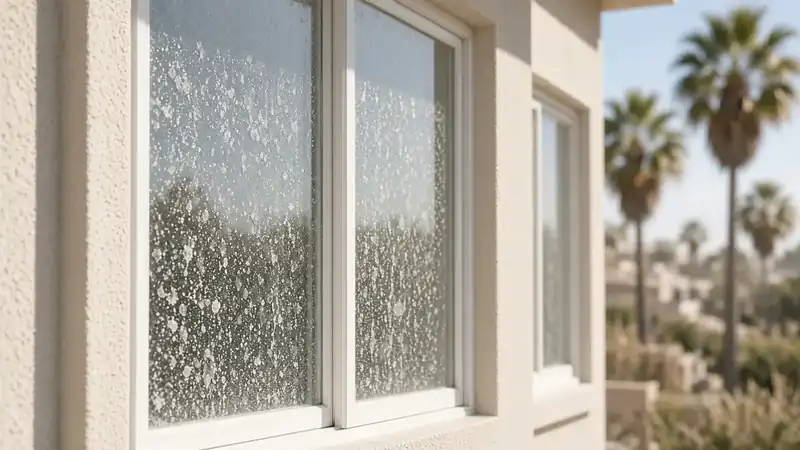
Clean tracks periodically rather than wiping only the glass. Mineral spotting on the pane itself is a different problem — hard-water stains on Los Angeles windows.
2. Your HVAC Filter May Need Attention
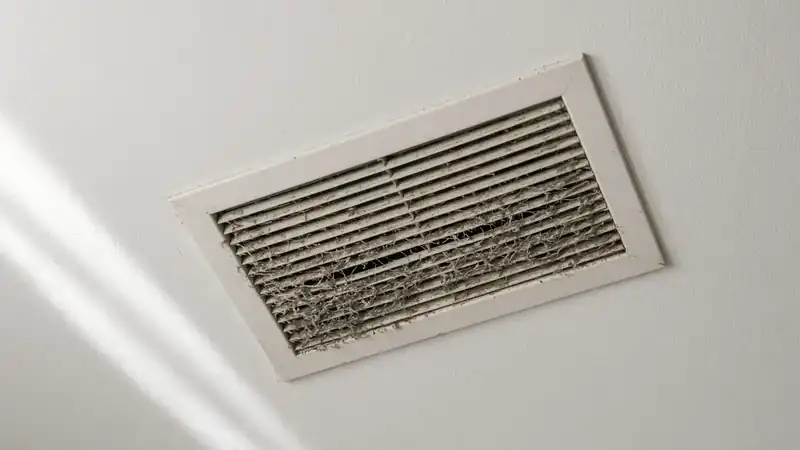
Central heating and cooling systems move enormous amounts of air.
Filters are designed to collect particles, but they require regular replacement or cleaning according to manufacturer instructions.
The EPA recommends maintaining HVAC filters and notes that higher-efficiency filtration can reduce indoor particulate matter when compatible with the system.
Do not simply install the highest-rated filter you can find without checking equipment requirements.
An HVAC professional can tell you what your system can safely accommodate.
3. Vacuuming Can Sometimes Redistribute Dust
A vacuum is supposed to remove dust.
A poorly filtered vacuum can collect some material while releasing smaller particles back into the room.
The EPA specifically suggests considering a HEPA-filtered vacuum to reduce the amount of collected dust that escapes back into indoor air.
Vacuum slowly enough for the machine to collect material rather than racing across the floor.
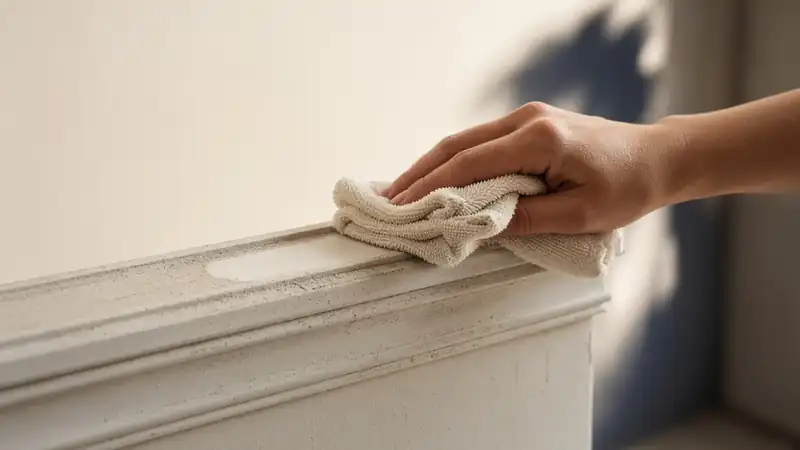
4. Dry Dusting Can Move Dust Instead of Removing It
A dry feather duster can produce a satisfying cloud.
That cloud is the problem.
You have moved dust from the furniture into the air, where some of it will eventually land somewhere else.
EPA guidance recommends damp-dusting hard surfaces.
The cloth should be damp enough to capture particles, not soaked.
5. Your Ceiling Fan Is Releasing Stored Dust
Ceiling-fan blades are horizontal shelves spinning above your head.
If the top of each blade is coated, turning the fan on can disturb accumulated material.
Clean the blades periodically, including the upper surface that you cannot see from below.
6. Upholstery Is Holding More Than You Think
Sofas, fabric chairs and mattresses are large textile surfaces.
Dust, lint, hair and other material can collect in fabric and between cushions.
The EPA recommends routine vacuuming of carpets and fabric-covered furniture as part of reducing indoor contaminants.
Remove cushions when appropriate and vacuum beneath them rather than cleaning only visible surfaces.
7. Carpet Acts Like a Large Particle Reservoir
Carpet has thousands of fibers designed to hold material.
That is not necessarily bad; particles trapped in carpet are not floating through the air.
The problem begins when accumulation exceeds what routine vacuuming removes.
Walk through a neglected carpet and material can be disturbed again.
Regular vacuuming is the first step.
Periodic deeper carpet cleaning may be appropriate depending on traffic, pets, stains and manufacturer recommendations. We run truck-mounted deep-steam carpet and upholstery work for households where vacuuming is no longer keeping up — especially pet stain and odor.
8. Your Pets Are Excellent Dust-Distribution Systems
Dogs and cats contribute hair and dander and can carry outdoor soil into the house.
Paws move between outdoor and indoor surfaces.
Hair settles into carpet, furniture, stair corners and baseboards.
Pet households often benefit from more frequent vacuuming, washable entry mats and periodic upholstery attention.
9. Your Shoes Are Bringing Material Inside
Every outdoor surface eventually ends up on footwear.
A simple entry system helps:
- Use an exterior mat
- Use an interior mat
- Remove shoes when practical
- Clean entry flooring more frequently than low-traffic areas
This reduces the material that travels deeper into the home.
10. Construction or Remodeling May Be the Source
Fine construction dust behaves differently from ordinary household dust.
It can settle on surfaces long after active work appears finished.
EPA remodeling guidance recommends controlling dust at the source, using barriers and proper ventilation during projects.
After remodeling, cleaning often requires multiple high-to-low passes rather than a single wipe. Cabinet tops, window tracks, light fixtures, door frames and vents deserve particular attention. That is post-construction cleaning, not a regular house visit.
11. You Are Ignoring the High Surfaces
Dust falls.
So if you clean only low surfaces, material from upper areas can continue migrating down.
Check:
- Ceiling fans
- Door-frame tops
- Upper shelving
- Light fixtures
- Curtain rods
- Tall furniture
- Cabinet tops
Cleaning high to low reduces the amount of rework.
12. Your Cleaning Routine May Be Missing the Edges
Dust accumulates where normal movement does not disturb it.
Look behind doors.
Along baseboards.
Under beds.
Behind sofas.
Around furniture legs.
Inside closet corners.
Along stair edges.
A room can have a clean-looking center and dusty perimeter.
That perimeter becomes a source every time air movement disturbs it.
Does Air Quality Matter?
Yes.
Indoor air contains particles generated inside the home as well as material entering from outdoors.
The EPA identifies cooking, cleaning activities, furnishings and outdoor pollution as potential contributors to indoor particulate matter.
During wildfire-smoke events, the strategy changes.
EPA guidance recommends keeping smoke out, filtering indoor air where possible and avoiding activities that generate additional particles. During smoke conditions, the EPA specifically advises against vacuuming unless using a HEPA-filtered vacuum and recommends damp wiping or mopping settled particles.
Actual wildfire ash requires additional precautions and should not be treated as ordinary household dust. EPA guidance recommends appropriate respiratory protection and avoiding normal household vacuums for ash cleanup.
A Better Anti-Dust Cleaning Routine
Start with the source.
Check filters.
Address open-window exposure.
Use entry mats.
Maintain upholstery.
Then clean high to low.
Begin with ceiling fans and high surfaces.
Damp-dust furniture.
Vacuum upholstery.
Vacuum flooring slowly.
Detail floor edges.
Damp-mop appropriate hard floors.
Wash or vacuum entry mats.
Repeat at a frequency appropriate for your household.
Why Dust Returns After Professional Cleaning
Even the best cleaning company cannot stop the environment from producing more dust.
Professional cleaning removes accumulated material.
Ongoing maintenance controls what arrives afterward.
If dust returns unusually fast, investigate sources rather than assuming the last cleaning failed.
The Bottom Line
A dusty home is usually not caused by one thing.
It is a system.
Outdoor air enters.
HVAC equipment moves air.
People and pets track material through rooms.
Textiles capture particles.
High surfaces store them.
Improper dusting redistributes them.
A successful strategy interrupts that cycle at several points.
If the home has already accumulated substantial dust, a detailed professional clean can create a better starting point. Use the house cleaning checklist to see what weekly cleaning is missing, then set a schedule you can keep.
Extreme Quality Clean provides residential cleaning throughout greater Los Angeles, plus carpet, upholstery, floor and window work, for households that need a more complete reset. Request a quote or call (818) 294-3141. You get the number before we start.
The goal is not to win an impossible war against every particle.
It is to make the home dramatically easier to maintain.